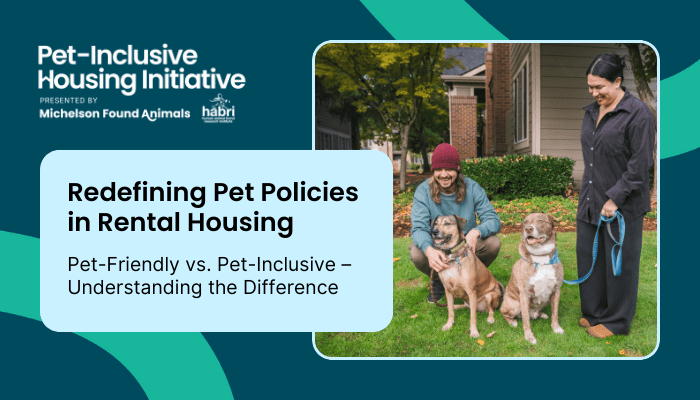
Is your apartment community truly "pet-inclusive," or is it just “pet-friendly”? Many "pet-friendly" policies hide hidden fees and breed restrictions that make finding a home for your furry family member tough. Michelson Found Animals' Pet-Inclusive Housing Initiative (PIHI) wants to change that! We believe in creating inclusive communities where pets are welcome without unnecessary limitations.Pet-Friendly vs. Pet-Inclusive – Understanding the DifferenceWhen it comes to rental housing, “pet-friendly” policies are often viewed as a step in the right direction. However, these policies often come with restrictions and fees that can make housing less accessible. Enter the concept of “pet-inclusive” policies, a more progressive approach to integrating pets into communities without unnecessary limitations.Pet-Friendly PoliciesWhile “pet-friendly” housing may seem welcoming, it often comes with restrictions, such as:
Pet-Inclusive PoliciesIn contrast, pet-inclusive policies take a more accommodating stance by removing arbitrary restrictions. These policies generally feature:
By shifting to pet-inclusive policies, rental communities can foster a more welcoming, supportive environment for all residents—human and animal alike.Breed ≠ Behavior – Why Stereotypes Shouldn’t Drive PolicyA groundbreaking 2022 study published in Science has shed light on a significant misconception: a dog’s breed does not dictate its behavior. Through research with over 18,000 dogs, scientists revealed several key findings that challenge long-standing stereotypes:
These findings suggest that current pet restrictions based on breed are flawed. Instead, rental policies could be more effective if they assessed dogs individually, focusing on each pet’s specific behavior rather than generalized breed stereotypes.For rental housing providers looking to adopt pet-inclusive policies, the Pet-Inclusive Housing Initiative resource page offers tools like the Pet Personality Profile and a Sample Pet Agreement to help make pet-related decisions based on individual behavior.The Power of Language in Pet Policy DiscussionsThe words we use can have a powerful impact on shaping perceptions, policies, and attitudes toward pets in rental housing. As the landscape of rental housing evolves, so should our language to reflect a more inclusive, respectful approach. Here are a few language adjustments that can help foster a more positive environment:“Pet-Friendly” vs. “Pet-Inclusive”: While pet-friendly housing might suggest openness, it often comes with limitations. “Pet-inclusive” more accurately represents communities that welcome all pets without breed, size, or excessive fee restrictions.“Landlord” vs. “Rental Housing Provider”: Referring to property owners as rental housing providers highlights their role in creating a supportive housing environment rather than merely owning property.“Tenant” vs. “Resident”: The term “resident” conveys a sense of belonging and community, while “tenant” emphasizes a contractual relationship. This shift can encourage a more positive living experience for all.“Aggressive” vs. “Reactive”: Using “reactive” or “selective” when discussing pet behavior acknowledges the context of individual responses rather than labeling a pet based on stereotypes.“Welfare” vs. “Well-being”: By focusing on “well-being,” we highlight comprehensive health—both physical and emotional—of animals, fostering a more humane approach.By adopting pet-inclusive language and policies, rental housing providers can help build communities that are more accepting and respectful of all pets and their owners. For more information and resources on pet-inclusive housing solutions, visit petsandhousing.org.


The Michelson Found Animals Foundation is part of the Michelson Philanthropies network.
© 2026 Michelson Found Animals Foundation, Inc.